Are Designer Hoodies Actually Worth It? The Honest Truth | Xsoot
Are Designer Hoodies Actually Worth It — Or Are You Just Paying for the Label?
Let's have the conversation nobody in streetwear wants to have honestly.
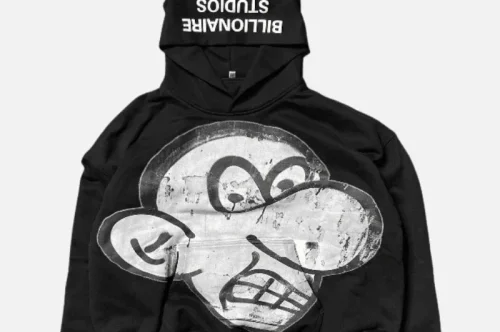
You've seen the price tags. $160 for a Billionaire Studios hoodie. $250 for Fear of God Essentials. $400 for a Balenciaga pullover. And somewhere in the back of your mind, you've wondered — is there actually $350 worth of difference between this and the $50 one from ASOS? Or are you just buying a logo?
I'm going to give you the real answer. Not the answer that makes brands feel good. Not the answer that makes budget shoppers feel validated. The actual truth — which is more complicated than either side wants to admit.
First: What Are You Actually Paying For?
When you buy a premium hoodie, your money goes to several different things. Understanding which ones matter — and which ones don't — is the whole game.
1. Fabric Quality (Matters — A Lot)
This is the one area where the price difference is genuinely real and genuinely justifiable.
A standard high-street hoodie sits around 280–320GSM. A Billionaire Studios hoodie is 500GSM. That's not marketing language — it's a measurable, physical difference in how much cotton is packed into the fabric per square metre.
What that means in practice: the premium hoodie is heavier, warmer, more structured, and will hold its shape after 50 washes when the cheaper one has gone thin and shapeless after 10.
Verdict on fabric: the price difference is real here.
2. Construction (Matters)
Flatlock stitching vs standard stitching. Reinforced seams vs single-pass seams. Ribbed cuffs that hold tension vs ribbed cuffs that go floppy after three months.
These things add to manufacturing cost and they add to the lifespan of the garment. A well-constructed hoodie at $160 that lasts 5 years costs you $32 a year. A poorly constructed hoodie at $40 that lasts 18 months costs you $27 a year — and you had to go shopping again.
Verdict on construction: the price difference is real here too.
3. Fit and Silhouette (Matters — But Only If You Care About It)
Premium streetwear brands spend real money on pattern development. The boxy, dropped-shoulder silhouette of a Billionaire Studios hoodie isn't an accident — it's the result of multiple rounds of sample development to get the proportions exactly right.
If you care about how clothes look on your body and how a silhouette photographs, this matters. If you don't, it doesn't.
Verdict on fit: depends entirely on what you want from a hoodie.
4. The Logo (Doesn't Matter — But You're Still Paying For It)
Here's the part nobody wants to say out loud: a significant portion of the premium price on any branded garment is for the right to wear the logo in public.
That's not entirely irrational — brands have value, recognition has value, being part of a cultural moment has value. But you should know you're paying for it. The Billionaire Studios logo on your chest probably adds $30–$50 to the price of the hoodie compared to what an identical unbranded garment would cost.
Verdict on the logo: you're paying for it whether you acknowledge it or not.
5. The Packaging and Experience (Doesn't Matter After Day One)
The tissue paper, the branded bag, the sticker — this is all gone the first time you wear the hoodie. It contributes to the unboxing experience and the feeling of buying something premium, but it has zero impact on how the hoodie feels on day 300.
Verdict: irrelevant to long-term value.
The Price Breakdown: Where Your Money Actually Goes
Let's take a $160 Billionaire Studios hoodie and estimate where the money goes:
- Raw materials (500GSM cotton fabric): ~$25–35
- Manufacturing and labour: ~$20–30
- Quality control and sampling: ~$5–10
- Brand development, marketing, team: ~$30–40
- Retail margin / reseller margin: ~$30–40
- The logo premium: ~$20–30
So roughly $45–65 is pure product. The rest is brand, margin, and experience.
Is that a rip-off? Only if you think brand value is worthless. And for a lot of people, it isn't — the cultural cachet of wearing Billionaire Studios in 2026 is genuinely worth something to them.
The Honest Comparison
$18–$50 Hoodie (H&M, ASOS, SHEIN)
What you get: A hoodie that functions as a hoodie. Thin fabric, standard fit, will go fuzzy and shapeless faster than you'd like. Good for sleeping in, bad for anything where you want to look like you thought about your outfit.
Worth it if: You genuinely don't care about fit or longevity and just need something warm.
$70–$100 Hoodie (Champion Reverse Weave, basic Carhartt)
What you get: Actual quality. 360GSM+ fabric, proper construction, fits well. Champion's Reverse Weave is one of the most underrated pieces of clothing in existence — it holds its shape, washes well, and looks clean.
Worth it if: You want quality without paying for a brand name. This is the sweet spot for most people.
$120–$180 Hoodie (Billionaire Studios, Fear of God Essentials, Lululemon Scuba)
What you get: Premium fabric, considered silhouette, recognisable branding. These are genuinely excellent hoodies — the 500GSM construction, the fit, the durability — all of it is real. You're also paying for brand.
Worth it if: You wear hoodies constantly, care about how you look, and want something that lasts years. Even more worth it if you buy from a reseller below retail price.
$300+ Hoodie (Balenciaga, Fear of God main line, Rick Owens)
What you get: The same quality as the $160 tier plus significantly more brand prestige and an even higher logo premium.
Worth it if: Brand prestige is genuinely important to your life, work, or social environment. Otherwise, you're paying $150+ for a label.
The Argument FOR Buying Premium
1. Cost per wear is lower. A $160 hoodie you wear three times a week for three years costs you 35 cents per wear. A $40 hoodie you replace twice a year costs you more.
2. You stop thinking about it. When you own one genuinely great hoodie, you stop shopping for hoodies. The mental energy you save is worth something.
3. Quality is visible. 500GSM fabric looks different on a person. The structure, the drape, the way it holds its shape — people notice even when they can't articulate why.
4. It holds its value. A genuine Billionaire Studios hoodie in good condition can be resold for close to what you paid. A $40 ASOS hoodie has zero resale value.
The Argument AGAINST Buying Premium
1. The logo premium is real. You are paying for the right to wear a logo. If that doesn't appeal to you, you're overpaying.
2. Champion Reverse Weave exists. Genuinely excellent quality at $70–100. If you don't care about the brand, this is 80% of the product at 45% of the price.
3. Most people can't tell the difference. Your friends probably can't feel the GSM difference. If external validation from your wardrobe isn't important to you, the premium matters less.
4. Fast fashion has gotten better. ZARA and H&M's premium lines are noticeably better than they were five years ago. The gap between mid-market and premium has narrowed — not closed, but narrowed.
The Verdict
Designer hoodies are worth it — with one condition.
You have to be buying them for the right reasons. If you want quality fabric, a considered silhouette, and something that lasts — the premium is justified. The 500GSM construction is real, the fit is real, the durability is real.
If you're buying purely for the logo, or to signal wealth, or because you feel like you should — you might want to examine that more carefully. Because a Champion Reverse Weave will make you just as warm.
The smartest play: buy authentic premium pieces from authorised resellers at below-retail pricing. You get the real product without the full retail markup. That's where the value equation actually tips in your favour.
👉 Shop premium hoodies at Xsoot — authentic pieces, better prices
What Do You Think?
Are designer hoodies worth it? Drop your take in the comments. This is genuinely one of those debates where reasonable people disagree — and I want to hear both sides.